
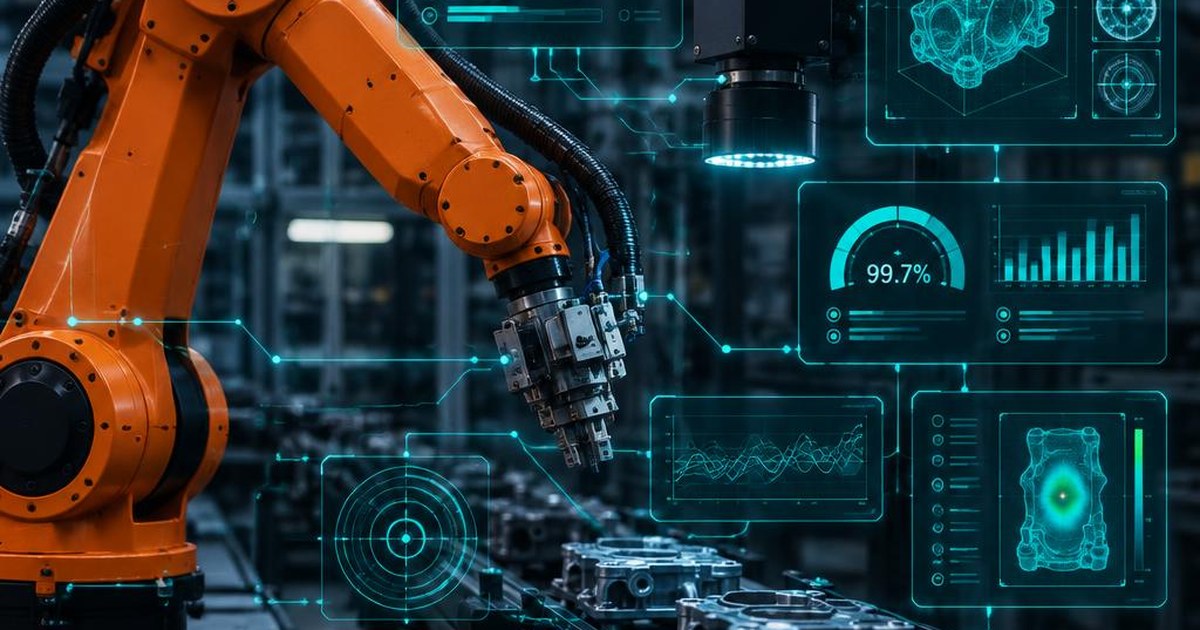
Processing data where it is generated, rather than sending everything to the cloud, is already a reality in industry. The difficult part is not making an Edge device work in a pilot, but ensuring that the same system can operate reliably, securely and with the ability to be updated across dozens, hundreds or thousands of installations, over many years. This gap between pilot and production is where many Edge Computing and Edge AI projects get stuck.
Working in the lab does not mean working on the factory floor
Edge Computing and artificial intelligence are changing how industrial companies process data and automate decisions. In-line visual inspection, predictive maintenance and asset monitoring can now run locally, without permanent dependence on the cloud.
But a pilot is validated under controlled conditions: a few devices, a stable network and an engineer nearby. In production, new challenges emerge: intermittent connectivity, different configurations across sites, remote updates, operational staff without specialised technical expertise and new regulatory requirements.
The challenge is no longer just bringing intelligence to the Edge. It is making it possible to deploy, manage, secure and evolve systems at scale.
From IoT gateway to intelligent Edge node
Many companies already have Edge systems without calling them that: IoT and IIoT gateways connecting sensor networks and sending data to the cloud. These devices are evolving from simple gateways into systems capable of analysing information and acting on it at the source:
- IoT / IIoT Gateway: collects data from sensors and machines and transmits it.
- Edge Computing: filters, aggregates and analyses data locally, determining which information needs to be sent to the cloud, if any.
- Edge AI: adds artificial intelligence capabilities to generate inferences or support real-time decisions based on that data.
Edge AI is, essentially, Edge Computing with AI capabilities. They therefore share many of the same challenges when moving into production, although AI introduces additional requirements, such as managing models throughout their lifecycle.
From the right hardware to the right architecture
Choosing an industrial computing platform is a key decision. The processor, AI acceleration, connectivity, interfaces, power consumption and environmental conditions determine which applications can run and under what circumstances.
But even the best hardware needs to be integrated into a complete architecture that covers at least:
- Platform and operating system, with a suitable runtime environment for applications and, where appropriate, containers.
- Applications and, where applicable, AI models, with controlled and traceable versions.
- Communications and integration with existing OT and IT systems.
- Security by design: secure boot, device identity, encryption and access control.
- Lifecycle management: updates, monitoring and device decommissioning.
This architecture must make it possible to add components, update applications and adapt to new requirements without redesigning every installation.
A working Edge device, with or without AI, is not yet an industrial solution ready for production.
Orchestration: from managing devices to operating a fleet
When a solution moves from a pilot to multiple installations, questions arise that are rarely considered during the early stages:
- How do we deploy a new application to fifty devices at once?
- How do we update an application or AI model while minimising disruption, and how do we roll back if something goes wrong?
- Which version is actually running at each site?
- How do we manage different configurations for each customer or installation?
- What happens when a device loses connectivity?
Orchestration addresses these questions through coordinated deployment, configuration, monitoring and update mechanisms. Instead of treating each device as an isolated installation, the entire fleet is managed as a distributed infrastructure.
This is particularly important in industrial environments, where connectivity may be limited, intermittent or restricted for security reasons. Devices must be able to continue operating autonomously and synchronise when connectivity returns, according to each system's capabilities and requirements.
Orchestration does not replace good architecture: it helps turn that architecture into repeatable and scalable operations.
Cybersecurity and compliance are part of the product
European regulation adds another dimension. The Cyber Resilience Act (CRA) establishes cybersecurity requirements for products with digital elements within its scope, together with vulnerability management and support obligations throughout their lifecycle.
The regulatory timeline is already underway:
- Since 11 September 2026, manufacturers have been required to report actively exploited vulnerabilities and severe incidents affecting the security of their products, where these CRA obligations apply. An early warning must be submitted within 24 hours of becoming aware of the vulnerability or incident, followed by the corresponding notifications and reports. These obligations may also apply to products placed on the market before December 2027.
- From 11 December 2027, the regulation's general requirements will apply, subject to the relevant transitional provisions and exceptions.
This influences decisions made long before a product reaches the market: system architecture, software components and their inventory (SBOM), secure update mechanisms, technical documentation and vulnerability response processes.
Security must also be demonstrated through appropriate evidence and maintained over time. CRA readiness should therefore not be an isolated task at the end of development, but a capability embedded in product design and lifecycle management.
Edge Ready Service (ERS™): preparing Edge solutions for industrial deployment
At EdgeAI Solutions, we have created Edge Ready Service (ERS™) to help manufacturers, software developers and system integrators turn Edge technologies into solutions prepared for real industrial environments.
ERS™ brings together four capabilities in a single service:
- Architecture: defining the architecture best suited to each application's requirements.
- Platform: selecting and integrating hardware and the operating system.
- Orchestration: deploying, configuring and monitoring the device fleet.
- Lifecycle: updating and evolving the system once deployed in the field.
We work with an ecosystem of specialised technology partners. EdgeAI Solutions acts as the solution architect and single point of contact for the project, coordinating the capabilities needed to build the solution.
The objective is to reduce integration effort, make deployments repeatable and provide a technology foundation that evolves with the customer. It is not about simply delivering a device with pre-installed software, but establishing an architecture that facilitates configuration, operation and scaling.
CRA-CRP™: from assessment to continuous readiness
Industrialising a product also means addressing its cybersecurity obligations. That is why we offer CRA-CRP™ (Continuous Readiness Program), a programme that supports manufacturers in preparing their products for the Cyber Resilience Act and maintaining alignment with its requirements over time.
With the support of specialised cybersecurity partners, the programme covers:
- Product assessment and gap identification.
- A prioritised roadmap.
- Implementation of measures and evidence generation.
- Continuous vulnerability monitoring and support for reporting obligations.
The key lies in the final step: readiness does not end with an assessment or roadmap, but is maintained throughout the product lifecycle.
Two services, one common goal
| ERS™ | CRA-CRP™ | |
|---|---|---|
| What it addresses | Industrialising and operating Edge systems, with or without AI | Addressing product cybersecurity obligations |
| Focus | Architecture, platform, orchestration | Gaps, measures, evidence, vulnerabilities |
| Outcome | Repeatable and scalable deployments | Continuous CRA readiness |
Both services can be contracted independently, but they are particularly complementary when introduced from the earliest design stages: architectural decisions made through ERS™ can facilitate the implementation of CRA requirements.
From isolated technologies to production-ready solutions
Bringing Edge Computing and Edge AI into production requires more than integrating hardware, software and applications. It demands a coherent architecture, orchestration capabilities, demonstrable security and processes that allow the system to be managed throughout its operational life.
Through ERS™ and CRA-CRP™, EdgeAI Solutions helps manufacturers, system integrators and developers turn their technologies into industrial solutions ready to be deployed, operated and evolved in the European market.
Bringing processing and intelligence to the Edge matters. Making them work securely, at scale and sustainably for years is what truly makes them production-ready.
From Edge AI technology to deployment-ready solutions.
Do you have an Edge Computing or Edge AI project that you want to bring into production?
Talk to our team